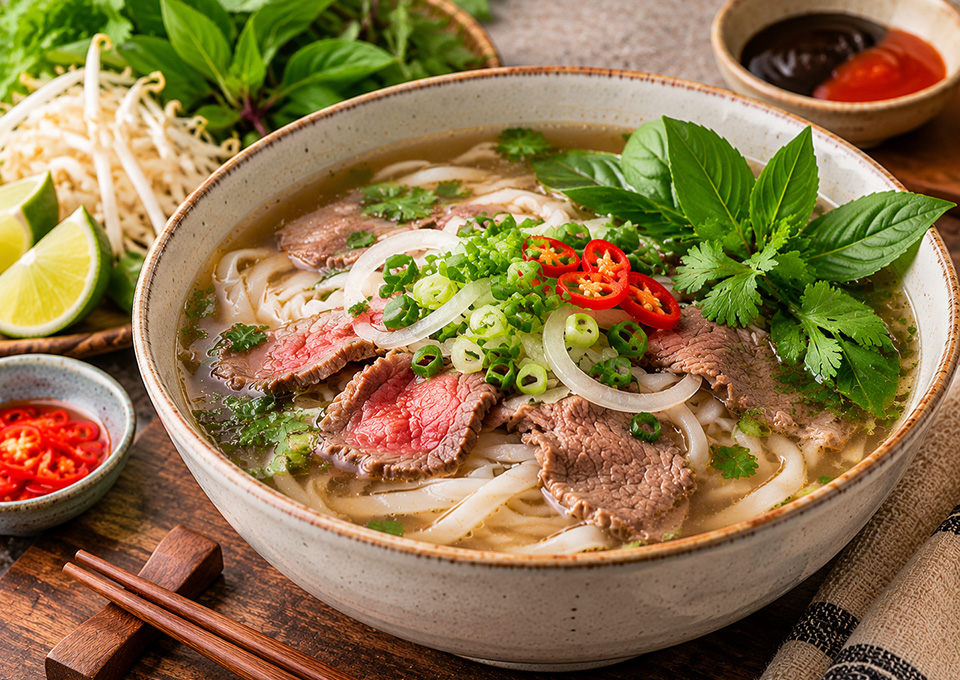
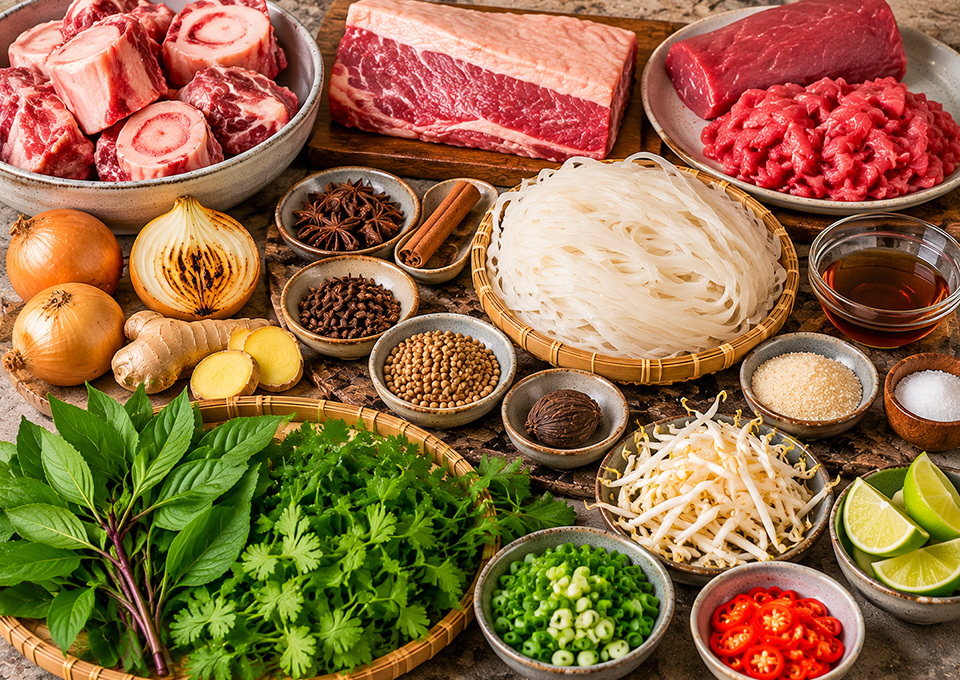
Phở Bò is Vietnam’s iconic beef noodle soup, celebrated for its clear, deeply aromatic broth and delicate balance of savory beef, toasted spices, and fresh herbs. This Hanoi-inspired version combines slowly simmered beef bones and brisket with charred onion, ginger, star anise, cinnamon, cloves, and coriander seeds. Flat rice noodles and thinly sliced beef complete the bowl, while scallions, cilantro, lime, and fresh chili provide a bright, fragrant finish. Rooted in Vietnamese culinary tradition, phở is a dish in which the quality of the broth is just as important as the ingredients served in it.
WHY YOU’LL LOVE IT
A deeply aromatic broth: Charred onion, ginger, star anise, cinnamon, and coriander create a layered, savory broth with remarkable depth.
A complete, satisfying bowl: Tender brisket, thinly sliced beef, and soft rice noodles make this traditional Vietnamese-inspired soup a substantial meal.
Freshness in every spoonful: Scallions, cilantro, basil, lime, and fresh chili let you balance the rich broth with bright herbs and citrus.
Ingredients
Makes: 4 servings.
3.3 lb beef marrow and knuckle bones (1.5 kg)
1.1 lb beef brisket, preferably with moderate marbling (500 g)
10.5 oz lean beef sirloin or eye of round, very thinly sliced (300 g)
15 cups cold water for the broth (3.5 liters), plus additional water for blanching
1 black cardamom pod, lightly crushed (optional, about 3 g)
3 tablespoons fish sauce (45 ml)
1 tablespoon rock sugar or granulated sugar (about 12 g)
1 teaspoon fine salt (about 5 g), or to taste
14 oz dried flat rice noodles (400 g)
4 scallions, thinly sliced (about 60 g)
½ cup fresh cilantro leaves, roughly chopped (about 15 g)
1 cup fresh Thai basil leaves (about 20 g)
2 cups fresh bean sprouts (about 200 g)
2 limes, cut into wedges (about 120 g whole)
2 fresh red chilies, thinly sliced (about 20 g), or to taste
Ingredient note: Use marrow or knuckle bones for body and flavor, and brisket for tender, slow-cooked beef. Sirloin or eye of round should be sliced very thinly across the grain. Use flat rice noodles intended for phở, rather than wheat noodles. The broth's final fat content will depend on the bones and beef; skim excess fat before serving if desired. The nutritional estimate includes the listed meat, noodles, and garnishes.
Preparation
Time: Allow approximately 4 hours and 15 minutes total, including 35 minutes of active preparation and 3 hours and 40 minutes of cooking and simmering.
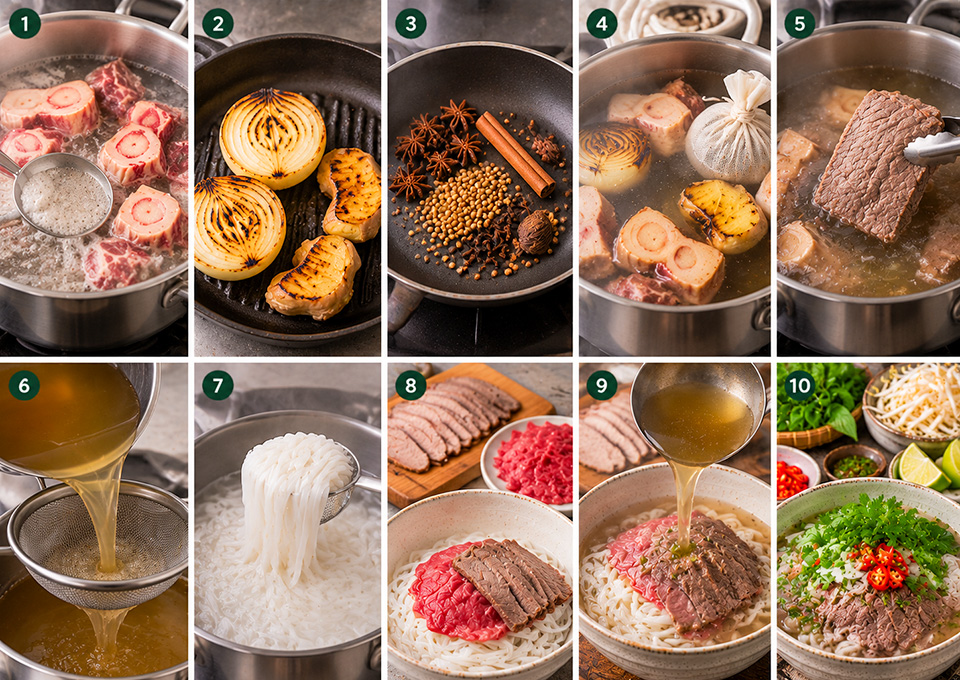
Place the beef bones and brisket in a large pot and cover with cold water. Bring to a boil and blanch for 5–10 minutes, skimming the foam that rises to the surface. Drain, rinse the bones and brisket thoroughly, and wash the pot to remove residue. This initial step helps produce a cleaner, clearer broth.
Place the onion halves and ginger halves under a broiler or over a flame, turning as needed, until their cut surfaces are deeply charred and fragrant, about 8–12 minutes. Remove loose blackened skin or ash while retaining the roasted aroma.
In a dry skillet over medium-low heat, toast the star anise, cinnamon stick, cloves, coriander seeds, and optional black cardamom for 2–3 minutes, until fragrant. Transfer the spices to a spice bag or wrap them in a small piece of clean cheesecloth.
Return the cleaned bones and brisket to the pot. Add the 15 cups of fresh cold water, charred onion, charred ginger, and spice bag. Bring slowly to a gentle simmer, skimming any foam that appears. Keep the broth at a low simmer rather than a rolling boil.
Simmer gently for approximately 3 hours, partially covered. Check the brisket after about 1½–2 hours; once tender, remove it, let it cool slightly, and refrigerate it until ready to slice. Continue simmering the bones until the broth is flavorful. Add a little hot water if needed to keep the bones mostly submerged.
Remove the bones, onion, ginger, and spice bag. Strain the broth through a fine-mesh sieve into a clean pot. Skim excess fat from the surface. Stir in the fish sauce, sugar, and salt, then taste and adjust the seasoning. Keep the broth hot at a gentle simmer.
Bring a separate pot of water to a boil and cook the dried rice noodles according to the package instructions. Drain and rinse briefly if the package recommends it. Divide the noodles evenly among four large serving bowls.
Slice the cooked brisket thinly across the grain. Slice the raw sirloin or eye of round very thinly across the grain and divide it among the bowls along with the brisket. Arrange the sliced beef in a single layer over the noodles.
Ladle the piping-hot broth over the beef and noodles, distributing the broth and cooked brisket evenly. The hot broth should cook the thin slices of raw beef; if they do not become fully cooked, return the slices to the simmering broth briefly before serving.
Top each bowl with sliced scallions, cilantro, Thai basil, bean sprouts, and fresh chili. Serve immediately with lime wedges on the side so each person can adjust the citrus and heat to taste.
Tips
Do not skip blanching and rinsing the bones. This helps remove impurities that can make the broth cloudy.
Char the onion and ginger thoroughly, but remove loose ash so the broth develops a roasted aroma without an unpleasant burnt flavor.
Keep the broth at a gentle simmer. A vigorous boil can emulsify fat into the liquid and make the broth cloudy.
For very thin slices of raw beef, chill the meat in the freezer for 20–30 minutes before slicing. This firms the surface and makes uniform slices easier.
Cook the rice noodles separately rather than in the broth to prevent excess starch from clouding the soup.
For the best quality, store broth, cooked brisket, noodles, and fresh garnishes separately. Refrigerate promptly and use the broth and cooked beef within 3–4 days. Reheat the broth thoroughly before assembling fresh bowls.