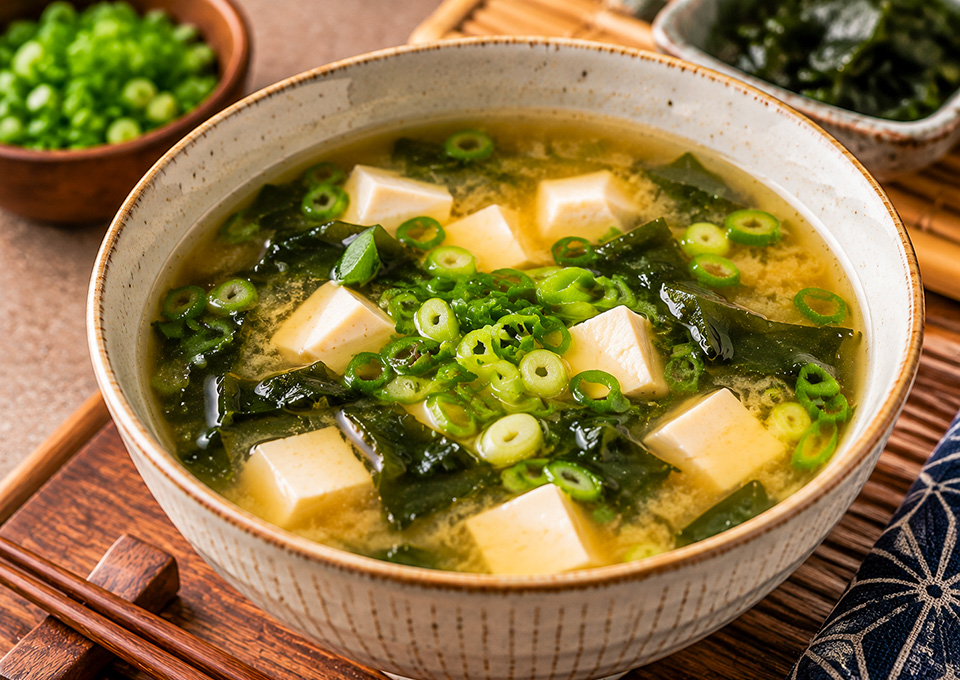
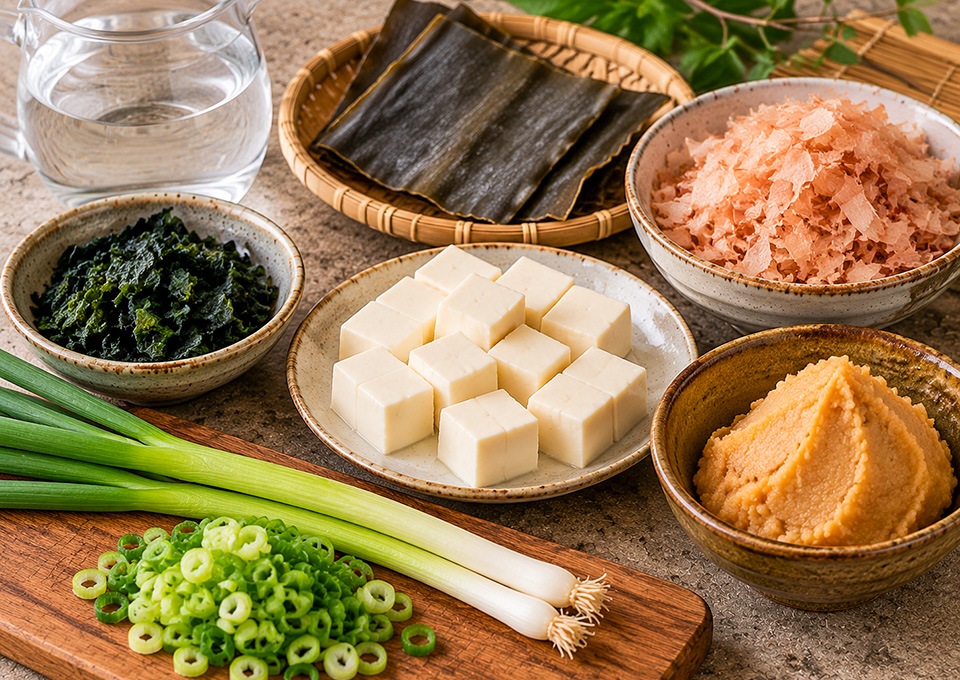
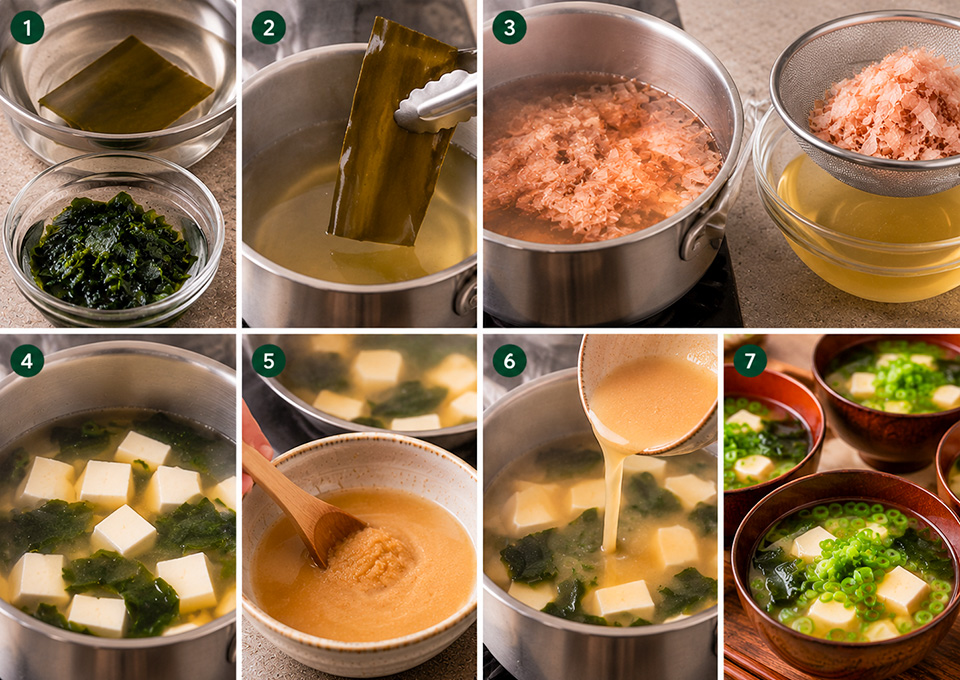
Japanese Miso Soup is a beloved staple of Japanese cuisine, traditionally served alongside rice and other dishes. Its foundation is dashi, a delicate Japanese stock that brings together the savory depth of kombu seaweed and dried bonito flakes. White miso paste adds a distinctive fermented flavor, while soft tofu, tender wakame seaweed, and sliced scallions provide contrasting textures and freshness. This classic homemade version celebrates the simplicity of Japanese cooking, allowing a few carefully selected ingredients to create a comforting, deeply savory soup.
Authentic Japanese flavor: Homemade kombu and bonito dashi creates a delicate umami-rich foundation for savory miso paste. Simple, comforting ingredients: Silky tofu, tender wakame, and fresh scallions create a satisfying combination of textures in every spoonful. Ready for everyday meals: This traditional Japanese soup comes together with a short cooking time and pairs beautifully with rice, vegetables, or your favorite main dish.
Makes: 4 servings.
Ingredient note: Use unseasoned dried kombu and katsuobushi to prepare the dashi from scratch. White miso provides a mild, slightly sweet flavor; different miso varieties may require adjusting the quantity to taste. The wakame is measured dry before rehydration. Choose silken tofu for a delicate texture, or use soft tofu if preferred. This recipe contains fish from the bonito flakes and soy from the tofu and miso.
Gluten-free note: Use white miso paste labeled gluten-free, without wheat or barley. Check the label before using.
A BITE OF HOPE · RECIPE TOOLS
Values per 100 g provide a common basis for comparing protein, carbs, and fats across foods—for example, 100 g of chicken breast versus 100 g of this recipe. This is not a recommended serving size. You do not need to weigh your meal or serve yourself exactly 100 g.
Calculated from ingredient weights. Cooking may change the final values per 100 g.

No ingredients found in the existing recipe Ingredients field.
Serving quantities are scaled only when a recognizable amount and unit can be safely parsed. Existing nutrition values are displayed as entered; estimates per 100 g use known or supported estimated ingredient weights.
Time: Allow approximately 40 minutes total, including 10 minutes of active preparation and cooking and 30 minutes of soaking time for the kombu.
Tips