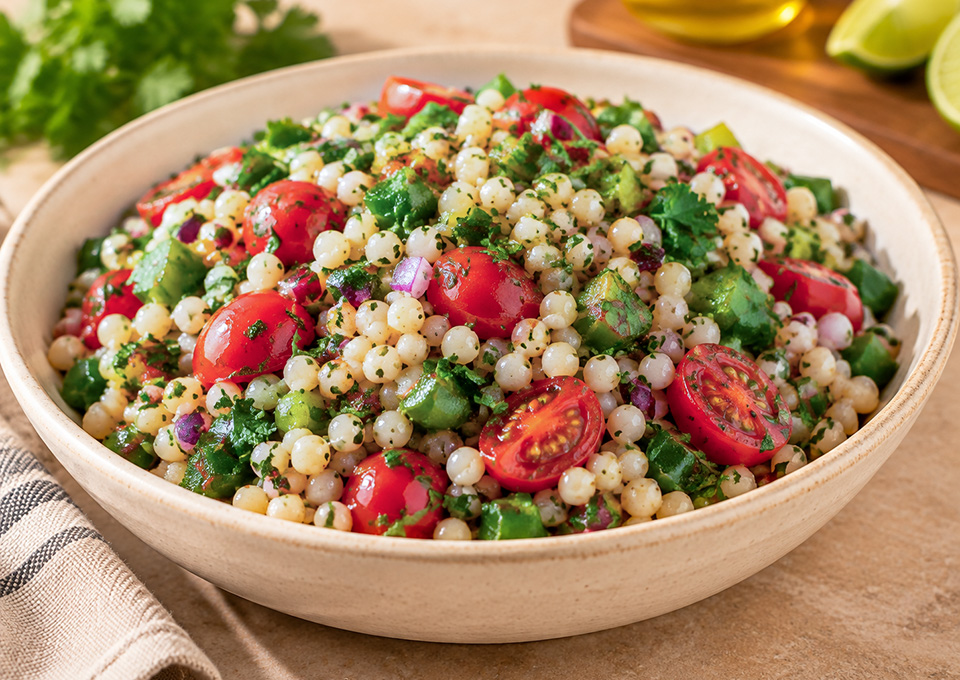
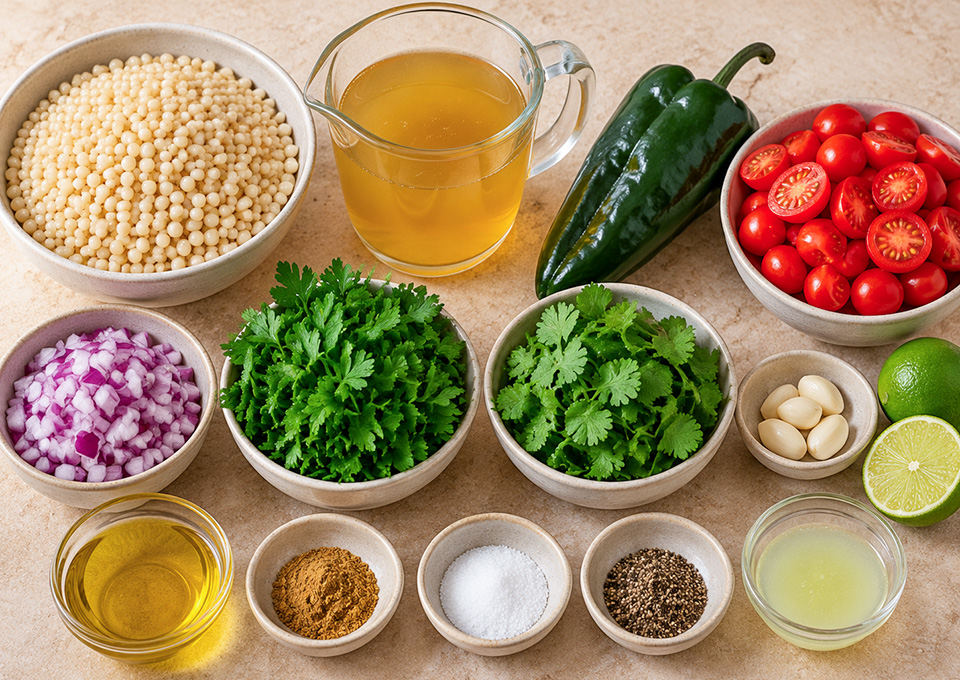
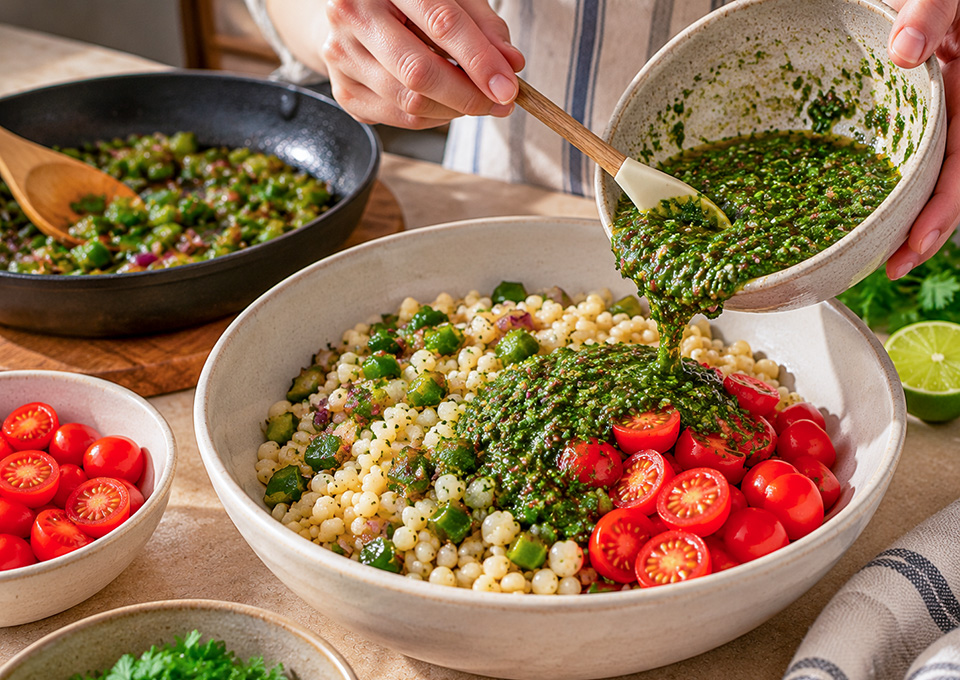
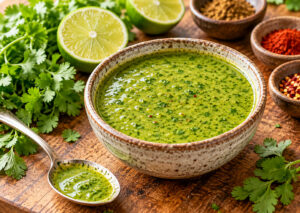
11:20 a.m. Pearl couscous began as a rice substitute in Israel during food rationing in the early 1950s. The food company Osem first shaped the toasted wheat pasta, known as ptitim, like grains of rice. It earned the nickname “Ben-Gurion’s rice,” and Osem later introduced the round pearls we use today. Around the same time, at a 1952 asado near Buenos Aires, a guest asked what went into the chimichurri and took out pencil and paper to write down the answer. Our salad brings those two stories together. We cook the pearls in vegetable broth with sautéed poblano and red onion, then toss them with juicy grape tomatoes and a chimichurri-style dressing of parsley, cilantro, garlic, cumin, and fresh lime.
Fresh parsley, cilantro, and lime give the chimichurri-inspired dressing a bright, bold flavor. Tender pearl couscous, juicy tomatoes, and sautéed poblano bring contrasting textures to every bite. Ready in about 30 minutes, it’s a colorful salad that works warm or at room temperature.
Makes: 4 servings.
Chimichurri Dressing
Ingredient note: Use pearl couscous, also called Israeli or giant couscous, rather than fine Moroccan couscous. Weigh the couscous before cooking. The recipe uses all the prepared dressing, including its olive oil.
A BITE OF HOPE · RECIPE TOOLS
Values per 100 g provide a common basis for comparing protein, carbs, and fats across foods—for example, 100 g of chicken breast versus 100 g of this recipe. This is not a recommended serving size. You do not need to weigh your meal or serve yourself exactly 100 g.
Calculated from ingredient weights. Cooking may change the final values per 100 g.
No ingredients found in the existing recipe Ingredients field.
Serving quantities are scaled only when a recognizable amount and unit can be safely parsed. Existing nutrition values are displayed as entered; estimates per 100 g use known or supported estimated ingredient weights.
Tips