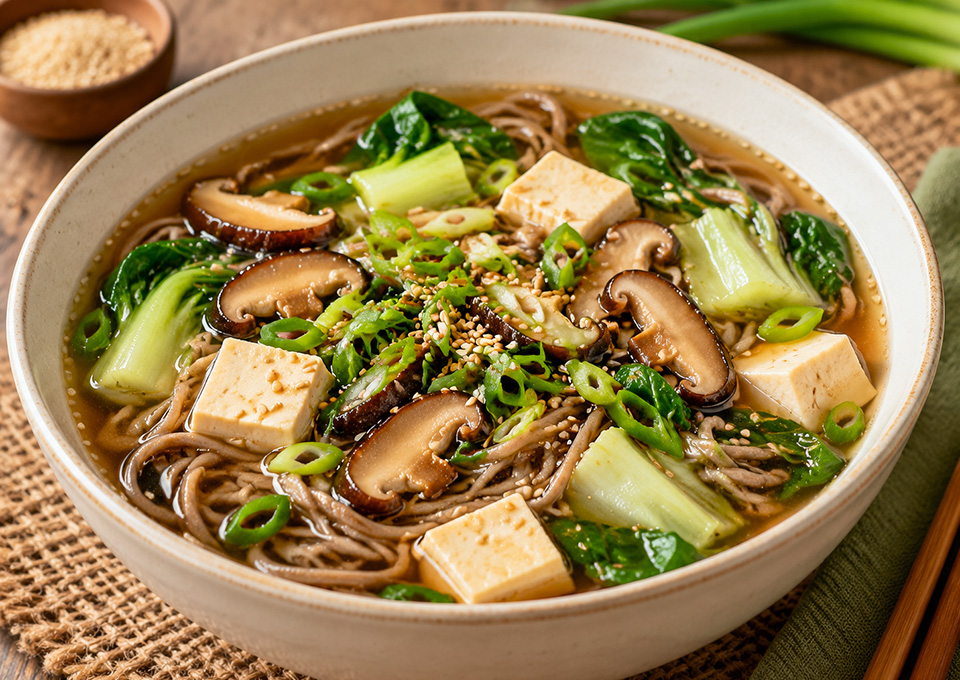
One of the earliest records of Japanese buckwheat noodles comes from Jōshō-ji temple in Nagano’s Kiso Valley in 1574. By the mid-18th century, street vendors in Edo, now Tokyo, were serving soba in hot broth, a style known today as kake soba. In Ibaraki, the regional tradition of kenchin soba pairs the noodles with a hearty soup that can include tofu and fresh shiitake. Our plant-based version brings soba, tofu, and shiitake together in a ginger-soy vegetable broth with bok choy, rice vinegar, and toasted sesame.
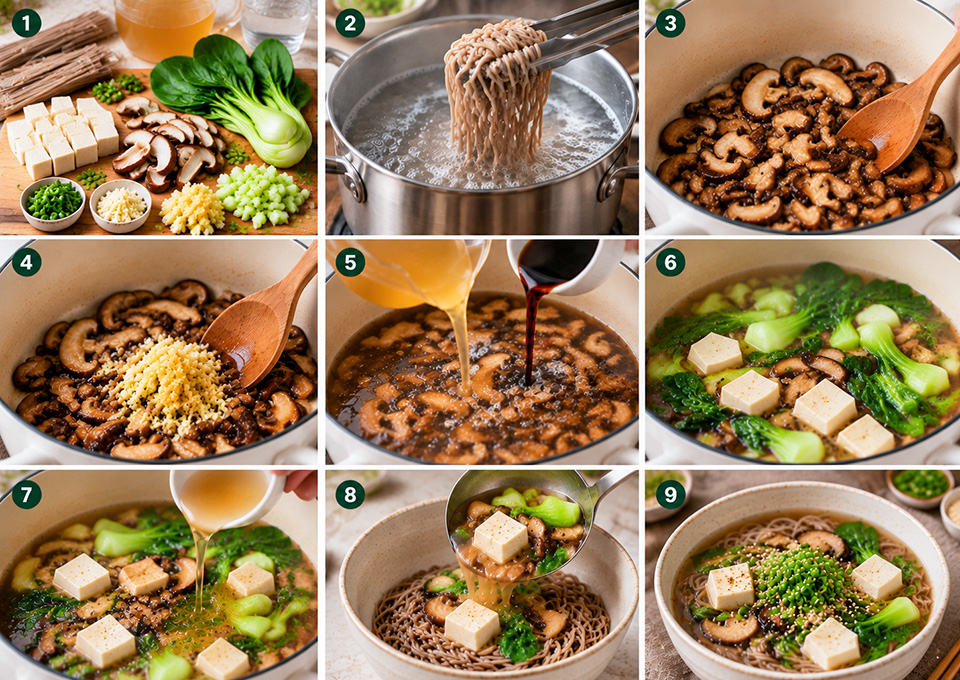
A fragrant, savory broth. Fresh ginger, garlic, and shiitakes give the broth depth, while a splash of rice vinegar brightens each spoonful. A satisfying mix of textures. Springy soba noodles, tender tofu, crisp bok choy stems, and toasted sesame seeds make every bite a little different. Ready in 30 minutes. Cook the soba while the broth simmers, then bring everything together in four steaming bowls.
Makes: 4 servings.
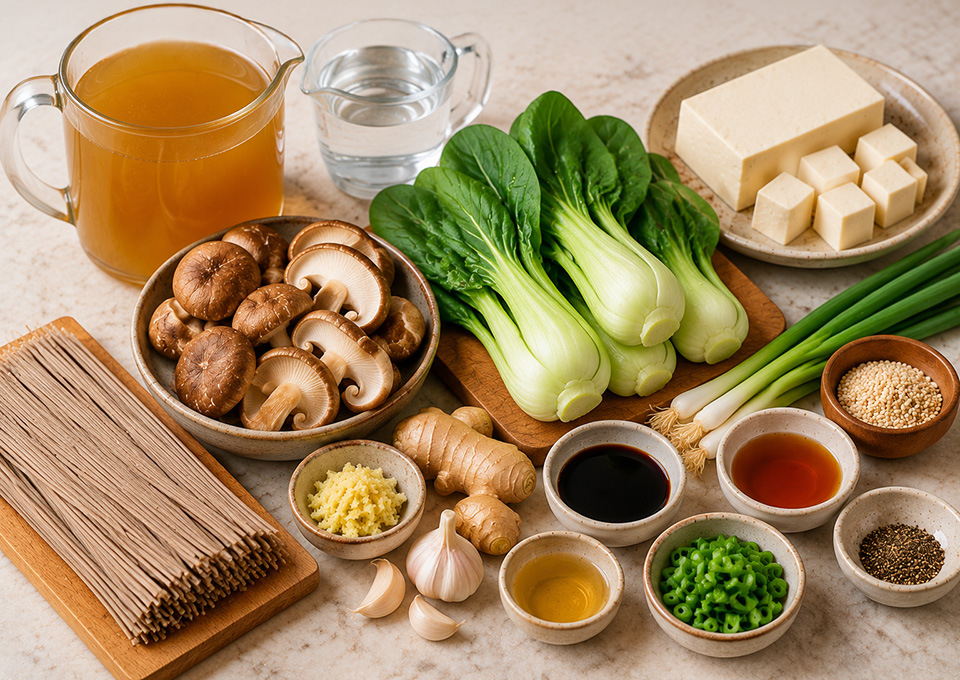
Ingredient note: Use firm tofu so the cubes hold their shape. Weigh the soba noodles dry, before cooking. Choose unseasoned rice vinegar and reduced-sodium soy sauce. The nutritional estimate includes all the sesame oil and sesame seeds. Check the soba package for wheat content if gluten avoidance is required.
A BITE OF HOPE · RECIPE TOOLS
Values per 100 g provide a common basis for comparing protein, carbs, and fats across foods—for example, 100 g of chicken breast versus 100 g of this recipe. This is not a recommended serving size. You do not need to weigh your meal or serve yourself exactly 100 g.
Calculated from ingredient weights. Cooking may change the final values per 100 g.
No ingredients found in the existing recipe Ingredients field.
Serving quantities are scaled only when a recognizable amount and unit can be safely parsed. Existing nutrition values are displayed as entered; estimates per 100 g use known or supported estimated ingredient weights.
Time: Allow approximately 30 minutes total, including 15 minutes of active preparation and 15 minutes of cooking.
Tips