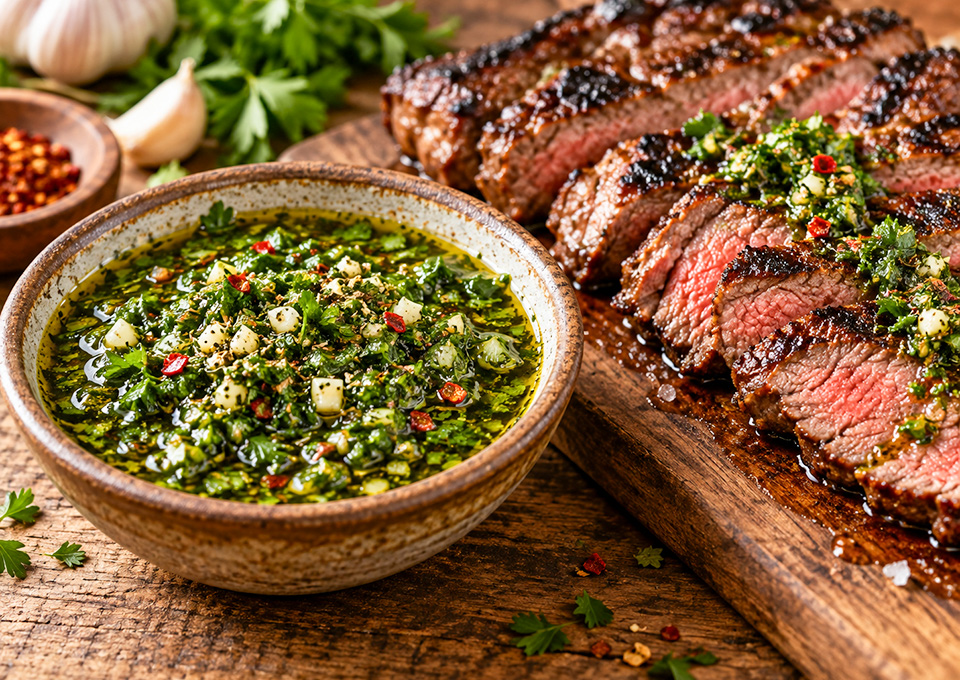
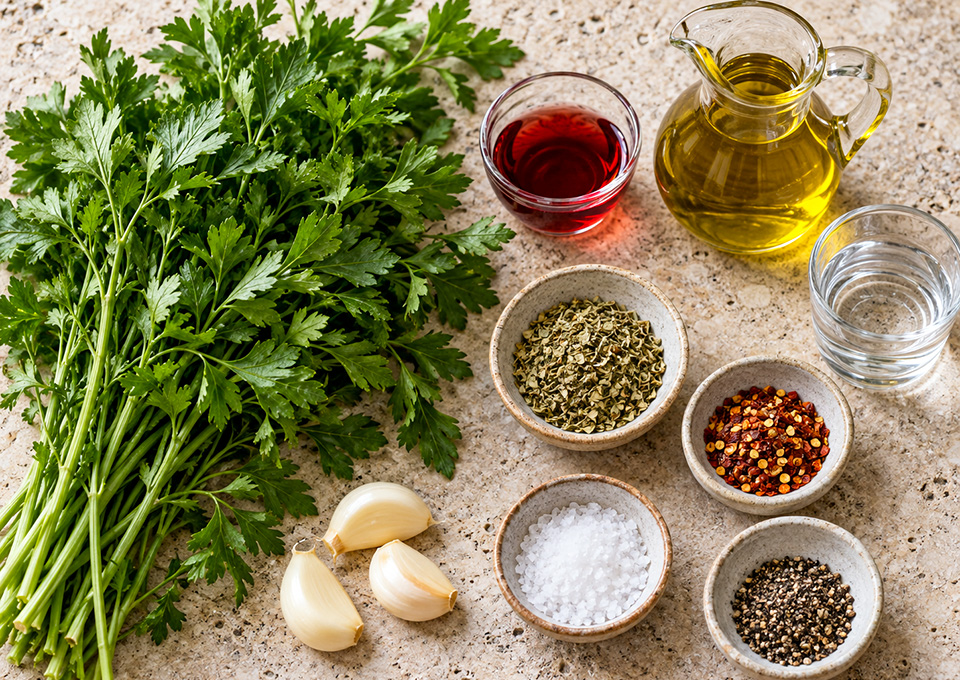
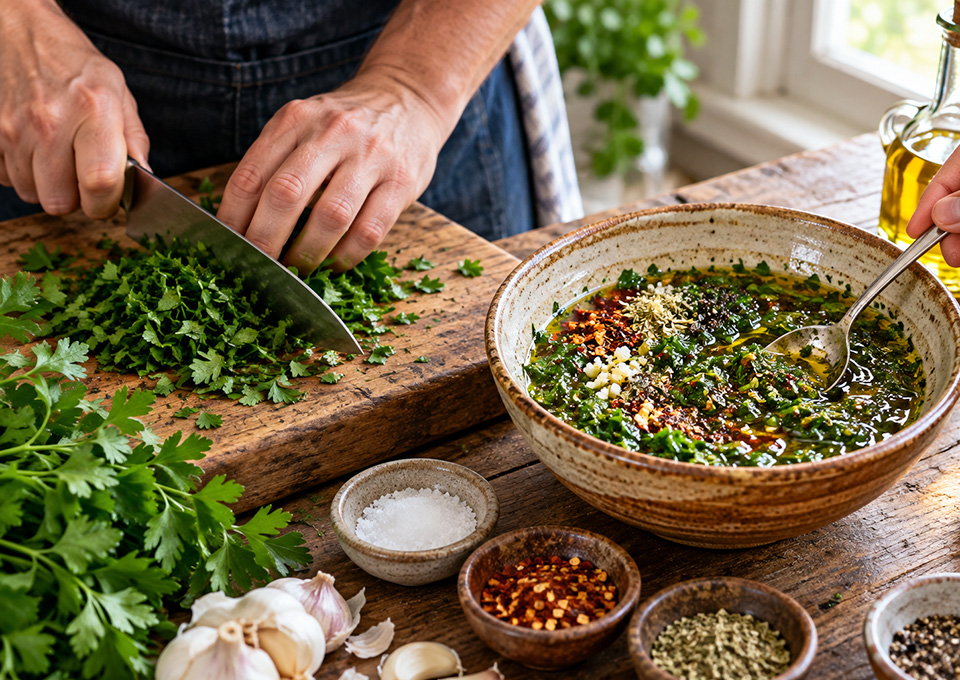
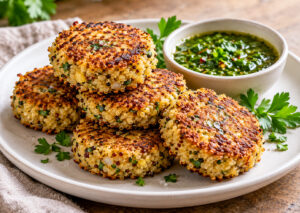
At an asado in Pacheco, near Buenos Aires, in 1952, a guest liked the chimichurri enough to write down what went into it: oil, vinegar, parsley, garlic, oregano, hot chile, salt, and pepper. A Buenos Aires cookbook published six years later recorded another version with saltwater brine and bay leaf, showing how much this staple of Argentine and Uruguayan grilling could vary. Our version starts with hand-chopped parsley and garlic. We add red wine vinegar and a squeeze of lemon, then season the olive oil with dried oregano, Argentine ají molido, and sweet paprika. After a short rest, it’s ready to spoon over grilled steak or vegetables.
Fresh parsley, garlic, and oregano give this sauce its bold, savory character. Red wine vinegar and lemon add a bright contrast to the rich oil. It’s quick to mix and pairs especially well with grilled meat, chicken, or vegetables.
A BITE OF HOPE · RECIPE TOOLS
Values per 100 g provide a common basis for comparing protein, carbs, and fats across foods—for example, 100 g of chicken breast versus 100 g of this recipe. This is not a recommended serving size. You do not need to weigh your meal or serve yourself exactly 100 g.
Calculated from ingredient weights. Cooking may change the final values per 100 g.

No ingredients found in the existing recipe Ingredients field.
Serving quantities are scaled only when a recognizable amount and unit can be safely parsed. Existing nutrition values are displayed as entered; estimates per 100 g use known or supported estimated ingredient weights.
Tips
Chop the herbs and garlic by hand to keep the sauce textured.
For deeper flavor, prepare it a day ahead and refrigerate it in a covered jar.
Let refrigerated chimichurri return to room temperature and stir before serving.