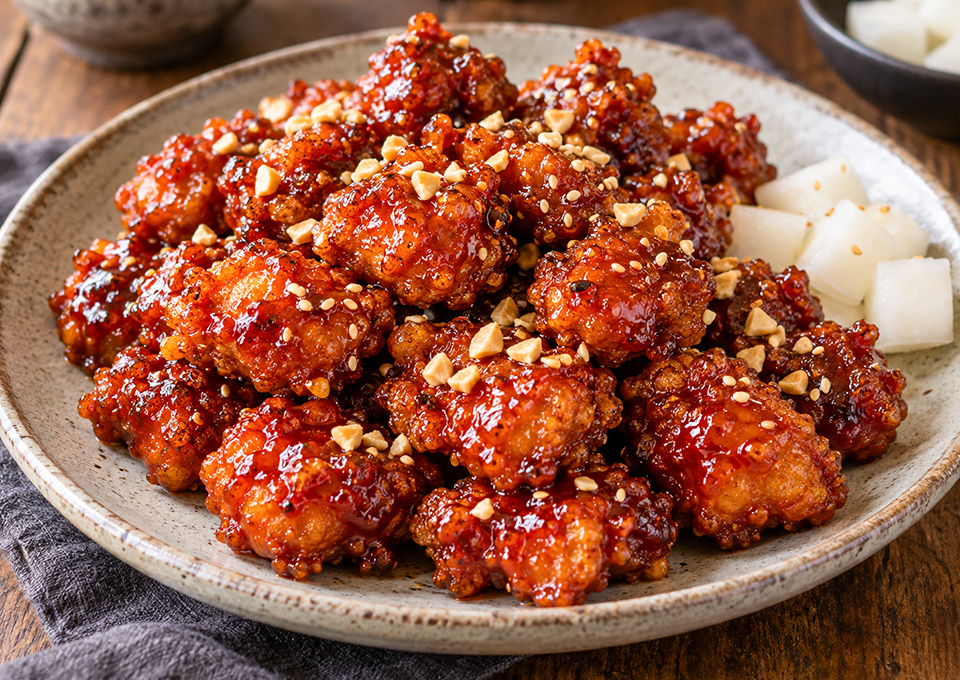
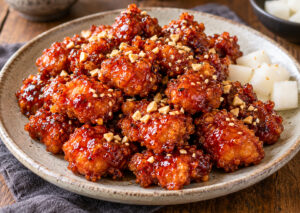
Dakgangjeong is Korean fried chicken cut into bite-size pieces and coated in a glossy, sweet-savory glaze. Its name and sticky coating are associated with gangjeong, a traditional Korean confection made with a crisp base and syrup. This version uses boneless chicken thighs, a light potato-starch coating, double frying, and a balanced gochujang glaze.
WHY YOU’LL LOVE IT
Crispy chicken stays crunchy under a glossy sweet-spicy glaze.
Bite-size pieces make it easy to serve and share.
The sauce balances honey, gochujang, garlic, and ginger.
Place the chicken in a bowl with the milk and refrigerate for 30 minutes. Drain well, then season with the salt, pepper, garlic, and ginger.
Whisk together the soy sauce, rice wine, vinegar, gochujang, honey, sesame oil, brown sugar, garlic, ginger, and pepper in a small saucepan.
Bring the sauce to a simmer over medium heat. Cook for 3–4 minutes, stirring, until glossy and slightly thickened. Remove from the heat.
Coat the chicken pieces evenly in potato starch, shaking off excess.
Heat about 1 inch of neutral oil in a heavy pot to 330°F (165°C). Fry the chicken in batches for about 3 minutes, until lightly golden and cooked through. Do not crowd the pot.
Let the oil return to temperature, then fry the chicken a second time for 1–2 minutes, until deeply golden and crisp. Check that the thickest pieces reach 165°F (74°C) with a food thermometer.
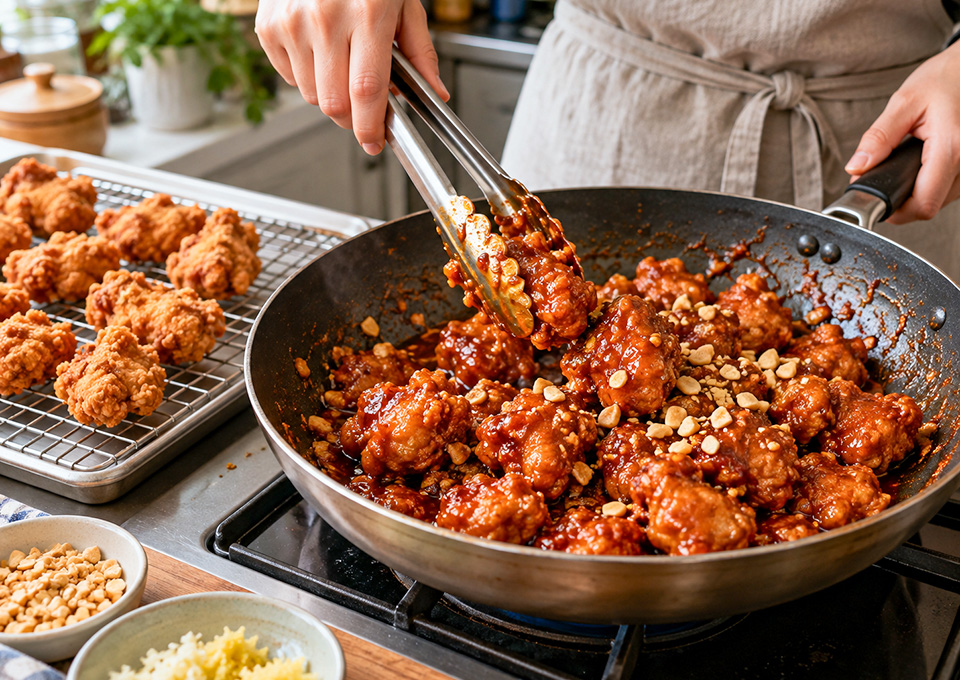
Reheat the sauce until bubbling. Add the fried chicken and toss until each piece is coated. Sprinkle with chopped peanuts and serve promptly.
Tips
Fry in batches so the oil temperature stays steady and the coating crisps evenly.
For a milder sauce, reduce or omit the gochujang.
The nutrition estimate assumes about 2 tablespoons of frying oil are absorbed; actual calories and fat vary with frying conditions and ingredient brands.
Ingredients
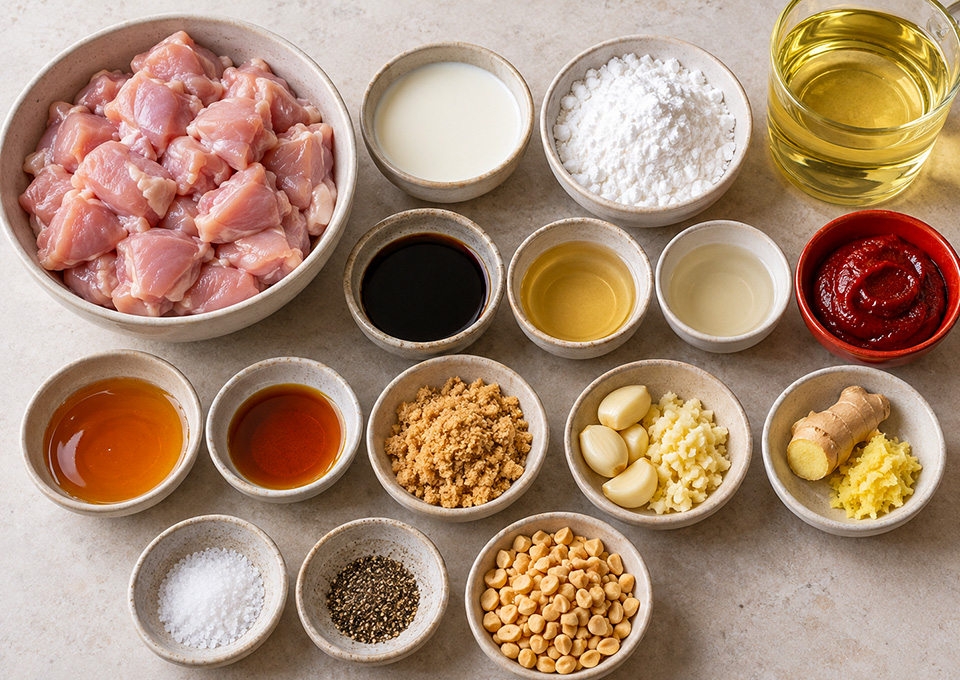
1 lb (16 oz / 454 g) boneless, skinless chicken thighs, cut into bite-size pieces
½ cup (4 fl oz / 120 ml) whole milk
¼ tsp salt
Pinch of ground black pepper
½ tsp minced garlic
½ tsp minced fresh ginger
⅓ cup (1¾ oz / 50 g) potato starch
Neutral oil, for frying (enough for about 1 inch / 2.5 cm depth; nutrition estimate counts about 2 tbsp / 30 ml absorbed)
Sauce
1 tbsp soy sauce
3 tbsp (1½ fl oz / 45 ml) Korean cooking rice wine (mirim) or mirin
2 tbsp (1 fl oz / 30 ml) rice vinegar or apple cider vinegar
1 tbsp gochujang
3 tbsp (2¼ oz / 63 g) honey
2 tsp sesame oil
2 tbsp (¾ oz / 22 g) packed brown sugar
1 tsp minced garlic
1 tsp grated fresh ginger
Pinch of ground black pepper
Garnish
1 tbsp (⅓ oz / 8 g) chopped peanuts
Preparation
Place the chicken in a bowl with the milk and refrigerate for 30 minutes. Drain well, then season with the salt, pepper, garlic, and ginger.
Whisk together the soy sauce, rice wine, vinegar, gochujang, honey, sesame oil, brown sugar, garlic, ginger, and pepper in a small saucepan.
Bring the sauce to a simmer over medium heat. Cook for 3–4 minutes, stirring, until glossy and slightly thickened. Remove from the heat.
Coat the chicken pieces evenly in potato starch, shaking off excess.
Heat about 1 inch of neutral oil in a heavy pot to 330°F (165°C). Fry the chicken in batches for about 3 minutes, until lightly golden and cooked through. Do not crowd the pot.
Let the oil return to temperature, then fry the chicken a second time for 1–2 minutes, until deeply golden and crisp. Check that the thickest pieces reach 165°F (74°C) with a food thermometer.
Reheat the sauce until bubbling. Add the fried chicken and toss until each piece is coated. Sprinkle with chopped peanuts and serve promptly.
Tips
Fry in batches so the oil temperature stays steady and the coating crisps evenly.
For a milder sauce, reduce or omit the gochujang.
The nutrition estimate assumes about 2 tablespoons of frying oil are absorbed; actual calories and fat vary with frying conditions and ingredient brands.